The book bet on the wrong medium. We argued the answers would arrive through video and voice: YouTube, smart speakers, video answers. The answer engines actually arrived as text in a chat window. The direction of travel was right (from links to answers, powered by what we called true AI), but the delivery mechanism was not what we predicted.
The dated record
The receipts
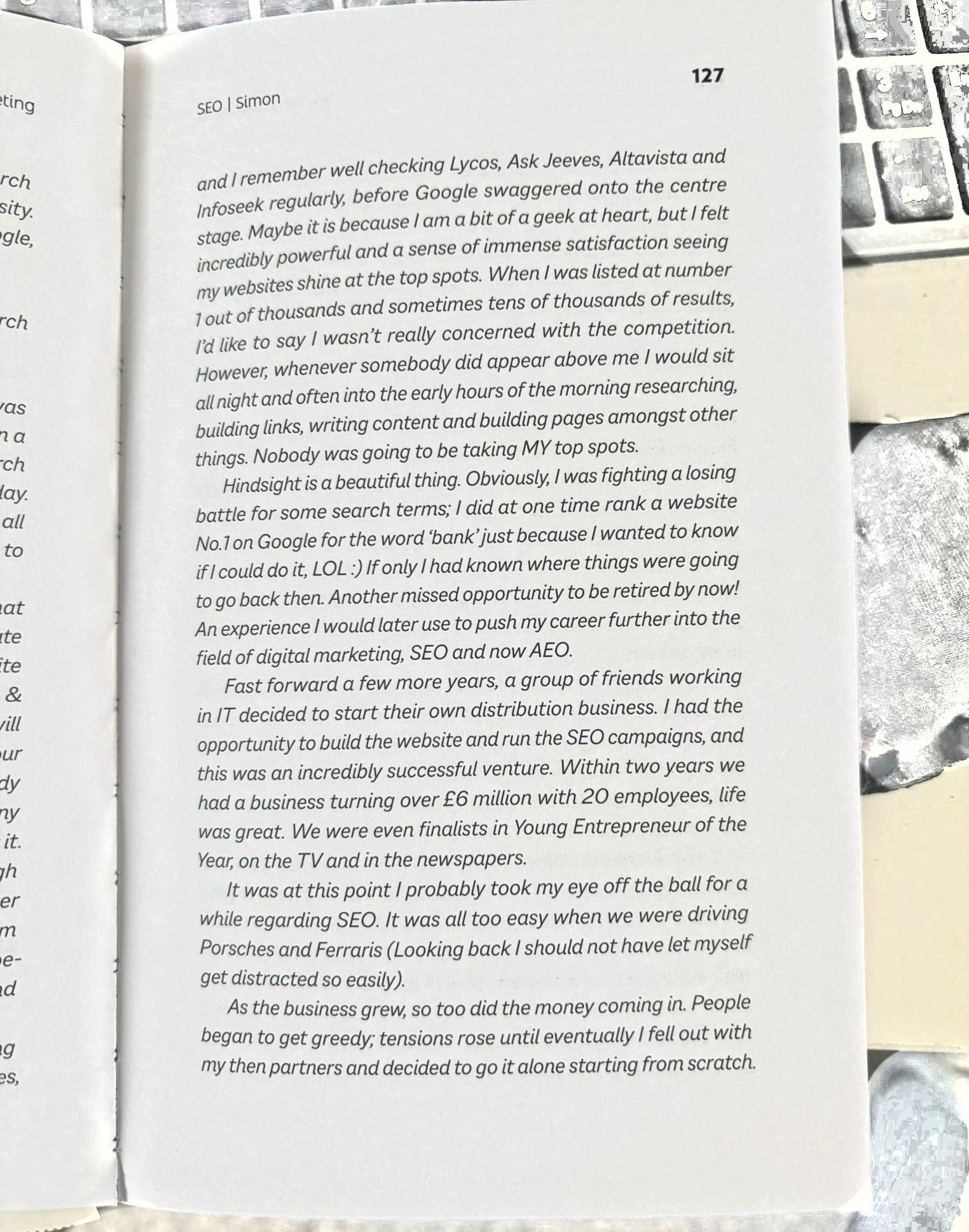
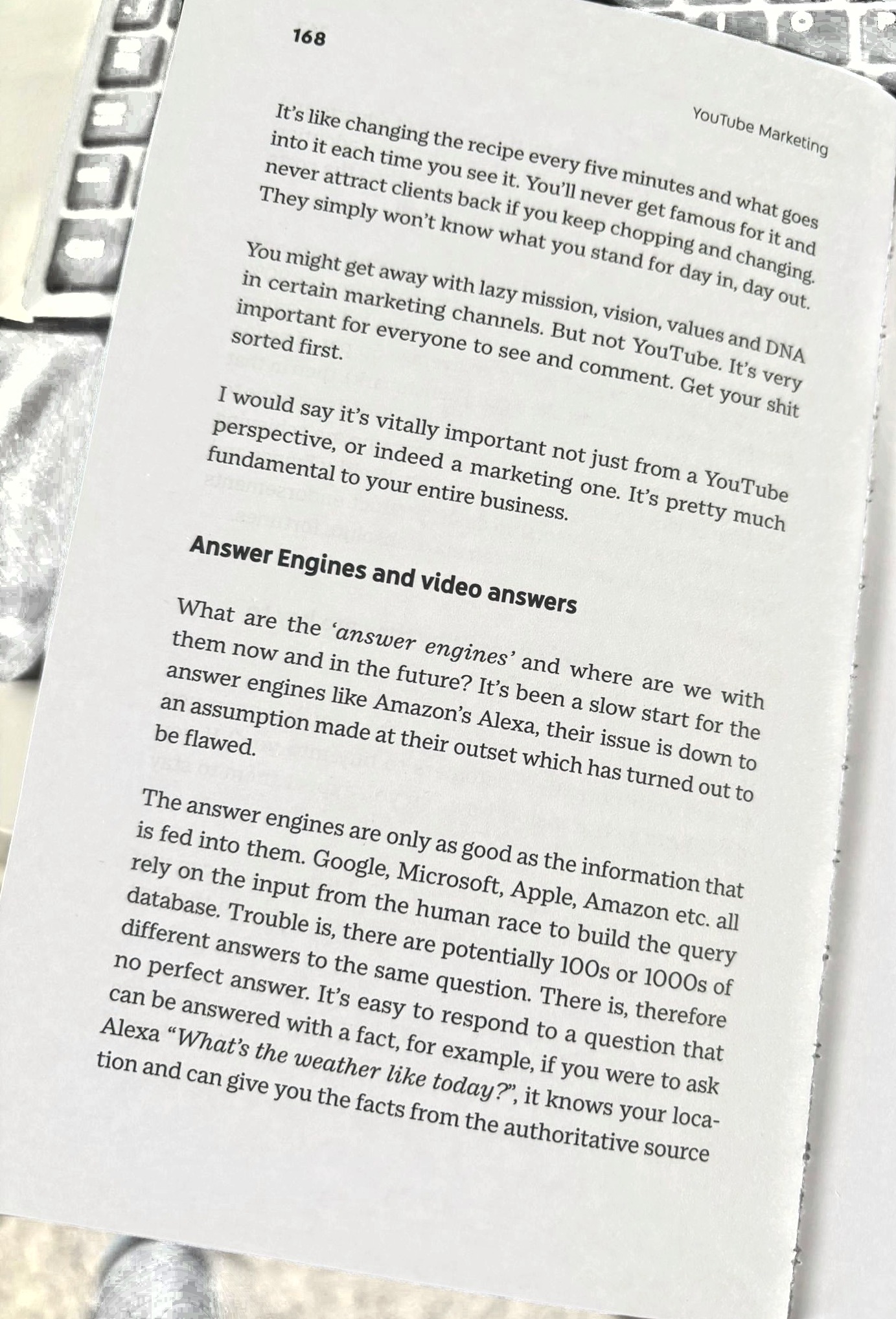
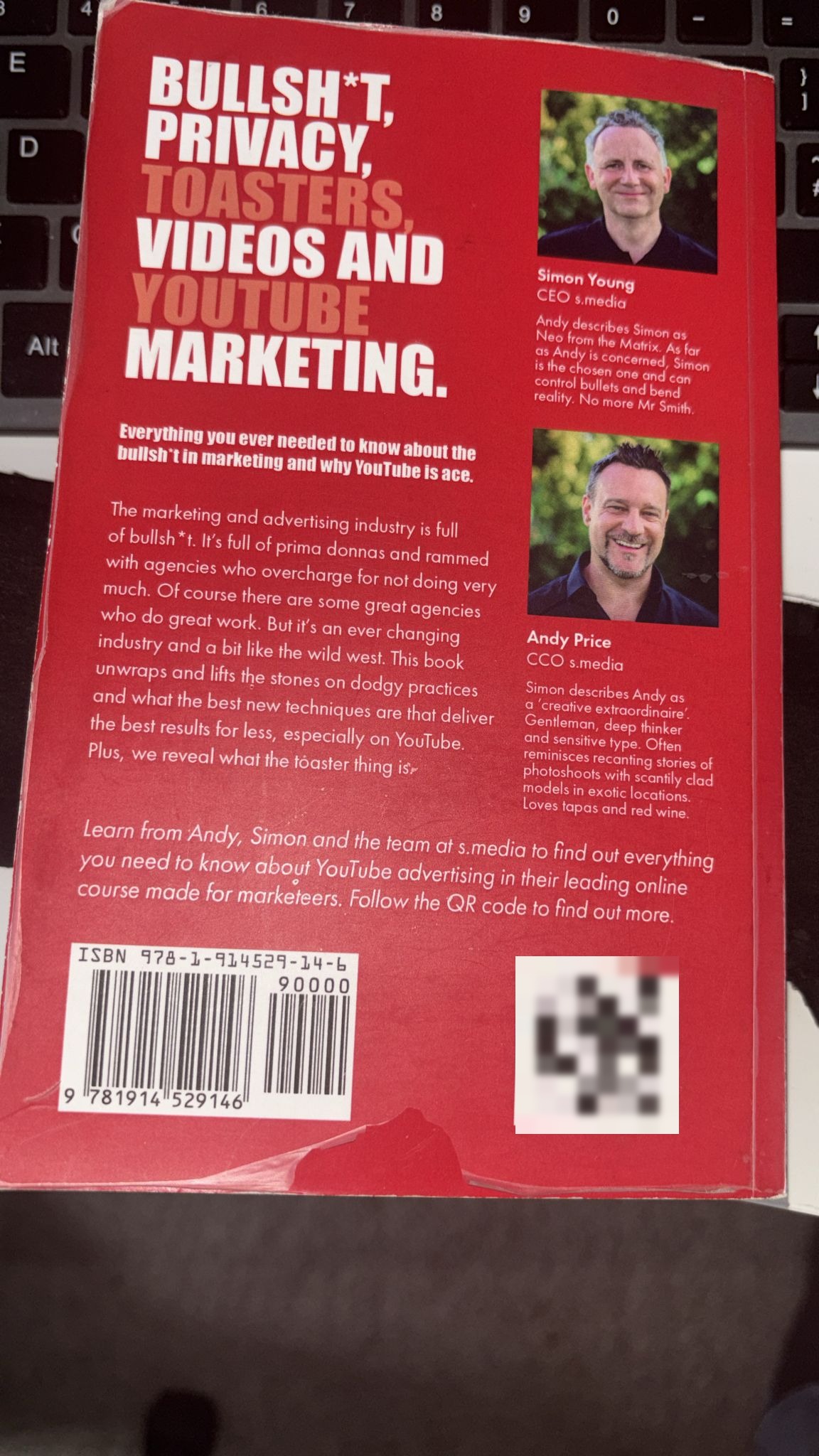
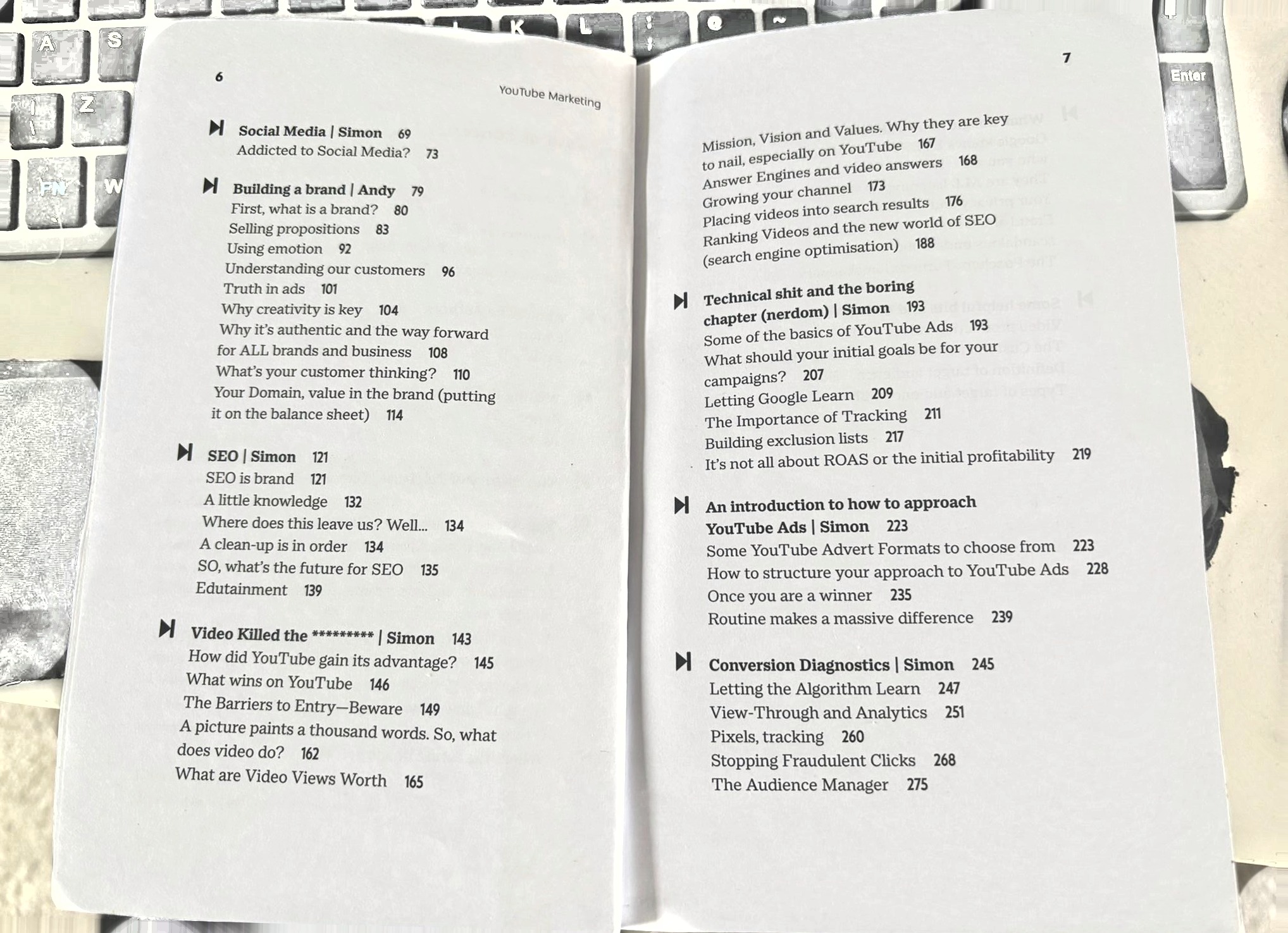
I make one unusual claim: that I was writing about answer engine optimisation years before ChatGPT existed. Unusual claims need evidence, so this page holds all of it. A video with a public 2019 upload date, dated articles with live permalinks, a printed book with an ISBN, photographs of the actual pages, and the calls I got wrong, published alongside the ones I got right.
No titles. No "pioneer", no "godfather", no "thought leader". Dates and artefacts. You do the sums.
Last updated 30 September 2026
What did I actually publish, and when?
Six dated artefacts, in order. Each one is public, third-party hosted, and checkable in under a minute.
22 July 2019
On camera, talking about answer engines
On camera in a video uploaded on 22 July 2019: "I'd like you to think about answer engines, how search needs to have intent in it, how people are going to search in the future." That is 1,227 days before ChatGPT existed, and ten weeks before the first article below.
To be precise about what this is and is not: the letters "AEO" are not spoken in this video, and its title was written recently. The written articles below said the word. What cannot be edited after the fact is the upload date, and YouTube displays it publicly under the player: 22 July 2019.
Read the full transcriptWatch on YouTube (opens in a new tab)
22 July 2019
“…what is called answer engine optimization”
In a video uploaded the same day as the SEO course, Simon says the phrase out loud at 9:09: "you are getting your business ready for what is called answer engine optimization — all of these devices are answer engines." Recorded 1,225 days before ChatGPT launched.
Read the full transcriptWatch on YouTube (opens in a new tab)
4 October 2019
The first AEO article
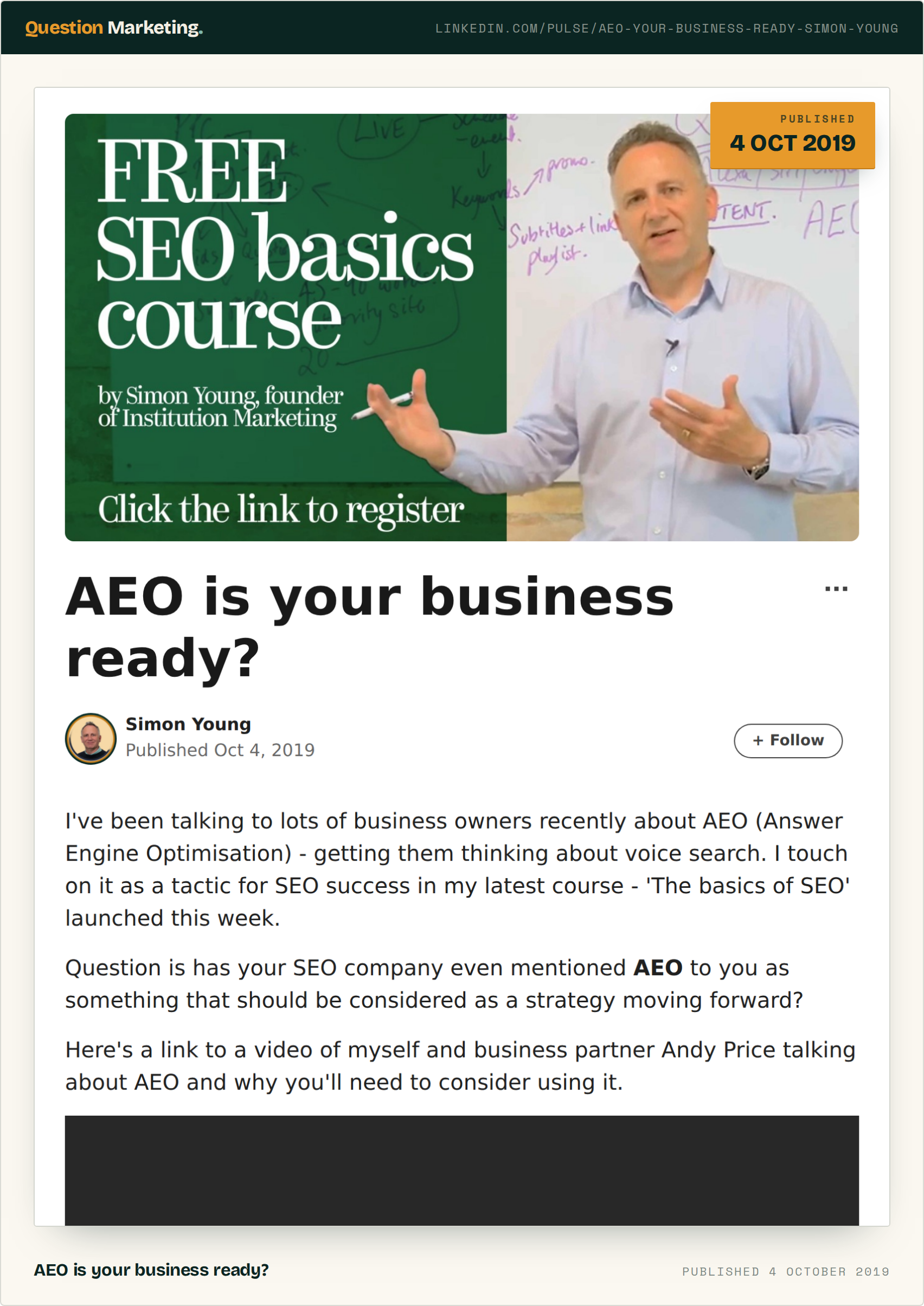
On 4 October 2019 I published an article on LinkedIn titled "AEO is your business ready?" ChatGPT launched on 30 November 2022, which is 1,153 days later.
LinkedIn no longer serves the original public URL. This capture preserves its title, byline and publication date without sending you to a broken page.
November 2019
Death of the SEO Industry, it needs a clean-up
The follow-up argued that the SEO industry's playbook was ending and that the trade needed clearing out. At the time it read as a provocation. The permalink and its structured data carry the November 2019 date.
The same article contains, word for word, the test I still give businesses today: "Ask your SEO company if they are planning campaigns for AEO. If you don't get an enthusiastic answer then it's time to walk and find another partner." I have been giving the same advice for seven years. The advice didn't change; the world caught up with it.
Read the article on LinkedIn (opens in a new tab)
2 October 2020
On camera, demonstrating an answer engine tool
On camera in a video uploaded on 2 October 2020, walking through a working answer engine tool we had built, and saying: "Google wants all of the answers built into Google Home. You've got Alexa, Siri, Cortana, Bixby, all the answer engines, they are all begging for content... and they want all of those pretty much to be questions and answers." That is 789 days before ChatGPT existed.
Same precision as the first video above: the letters "AEO" are not spoken here. "Answer engines" is, repeatedly, with the tool on screen. The upload date is displayed publicly under the player: 2 October 2020.
Read the full transcriptWatch on YouTube (opens in a new tab)
16 September 2021
The book, in print
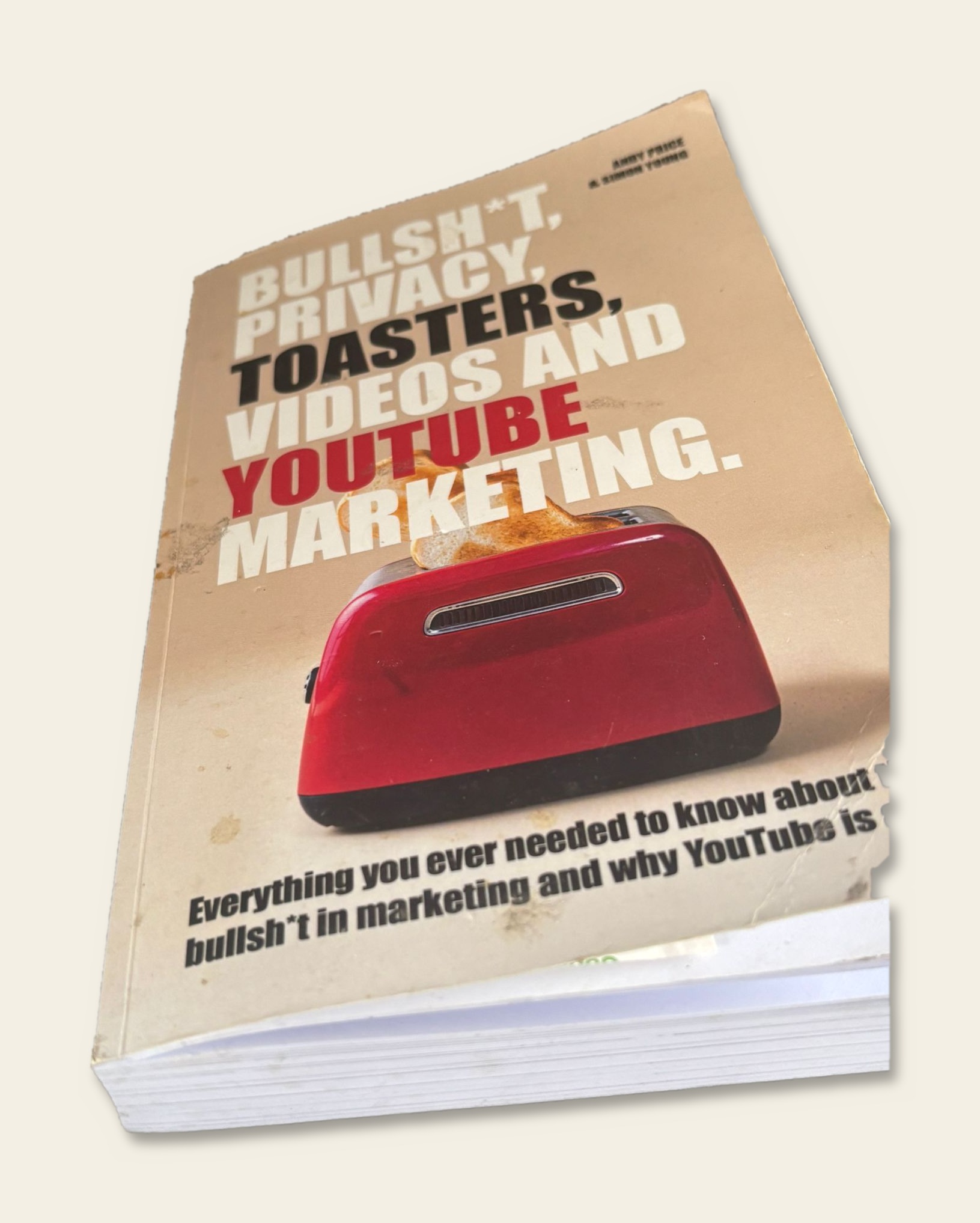
Andy Price and I published Bullsh*t, Privacy, Toasters, Videos and YouTube Marketing (FCM Publishing, ISBN 978-1-914529-14-6, foreword by Peter Sage). Publication date 16 September 2021: 440 days before ChatGPT launched.
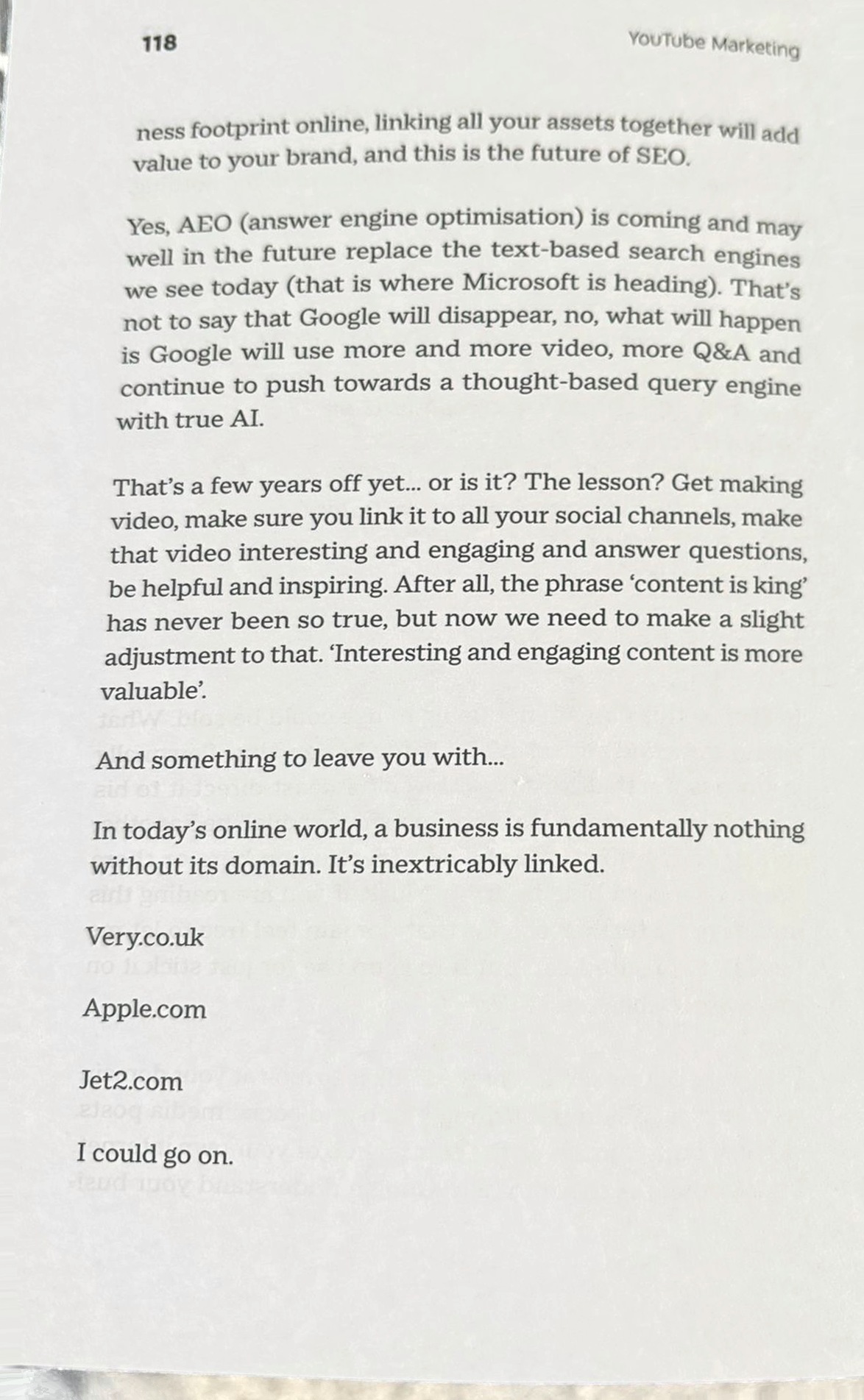
On page 118, in print:
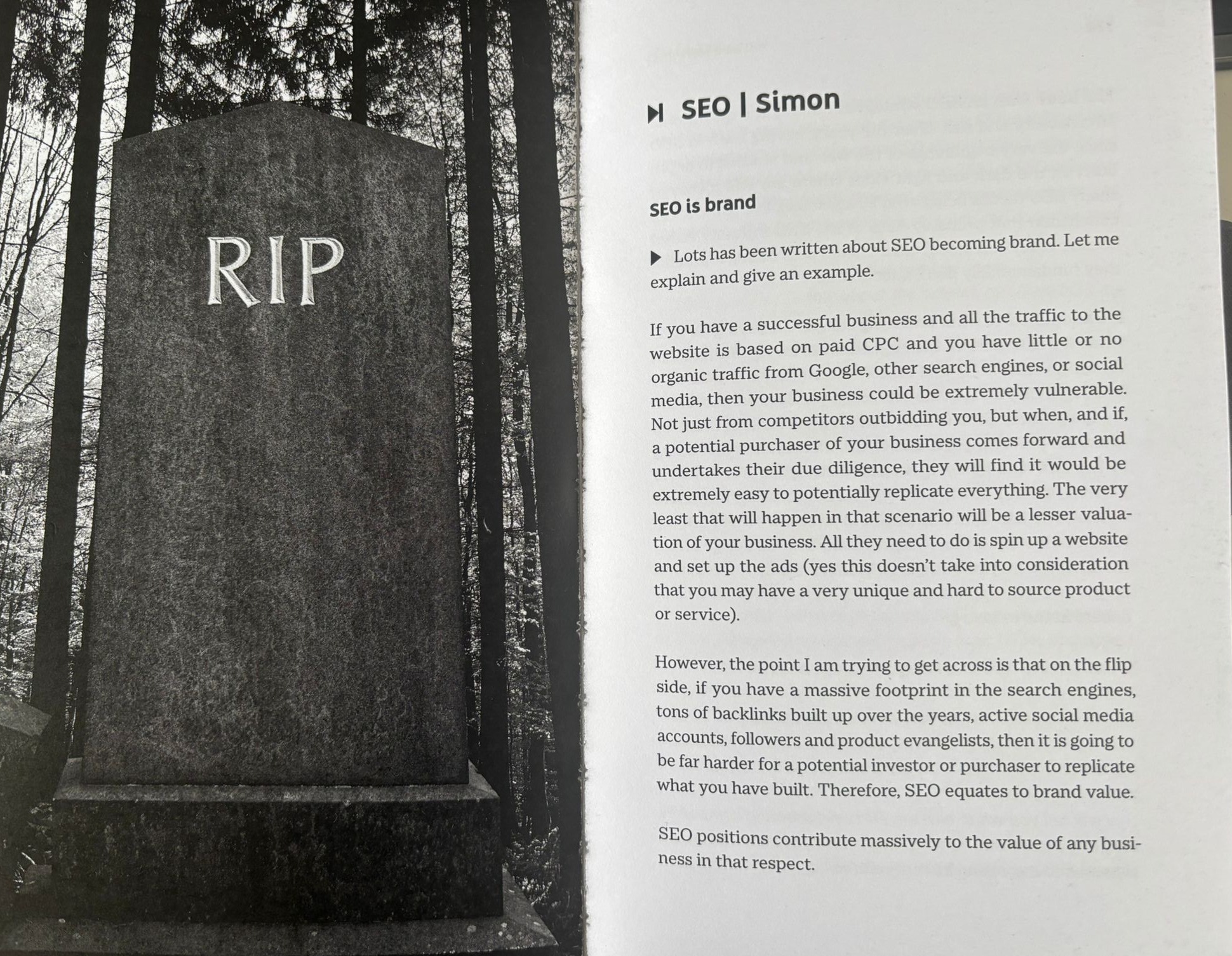
Yes, AEO (answer engine optimisation) is coming and may well in the future replace the text-based search engines we see today (that is where Microsoft is heading). That's not to say that Google will disappear, no, what will happen is Google will use more and more video, more Q&A and continue to push towards a thought-based query engine with true AI. That's a few years off yet... or is it?
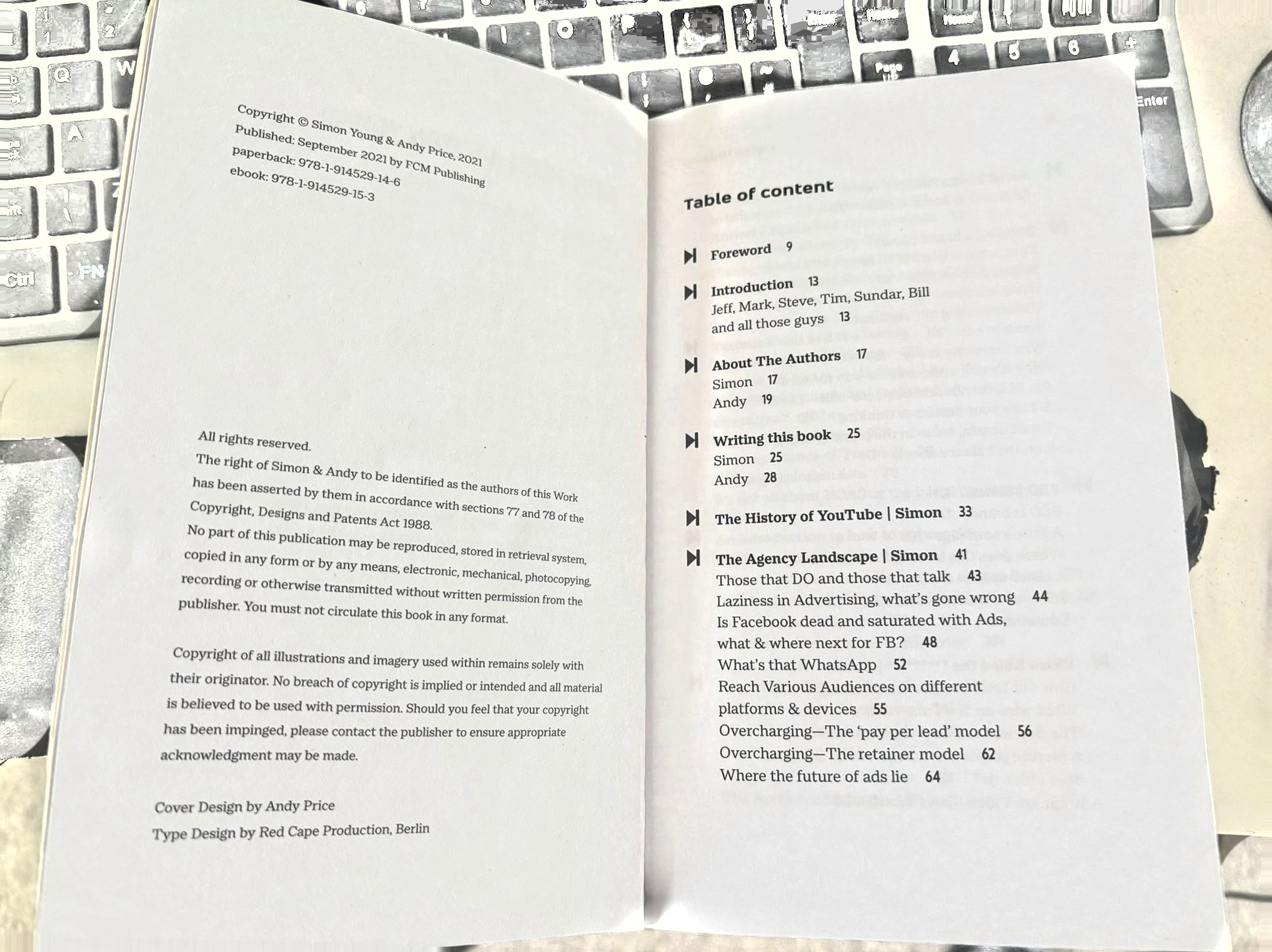
The book also devotes a chapter to the question directly: "Answer Engines and video answers", from page 168, including a walk-through on page 169 of why Google in 2021 could not answer a real question about car tyres once you gave it genuine personal context. The conclusion at the time: search needed intelligence.
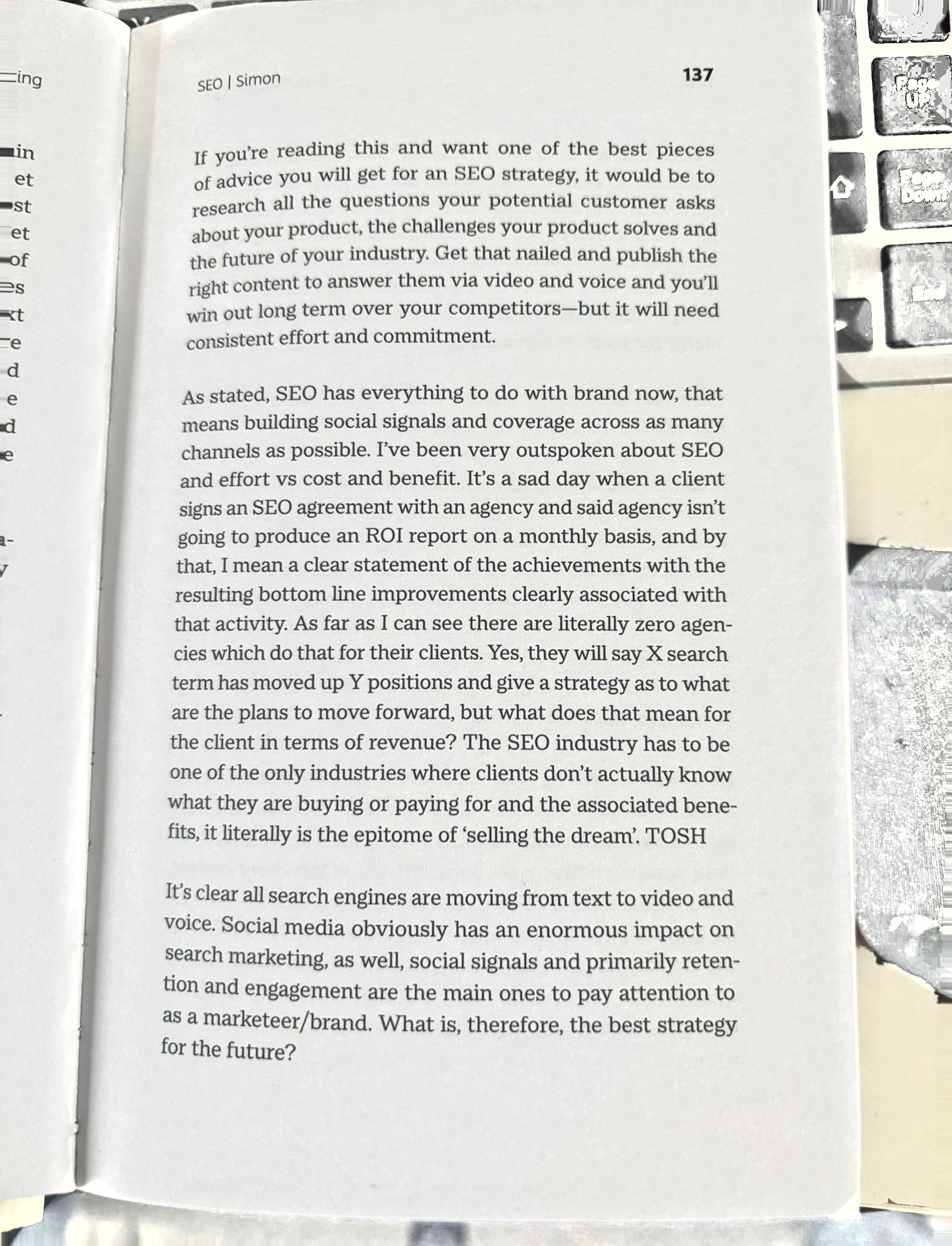
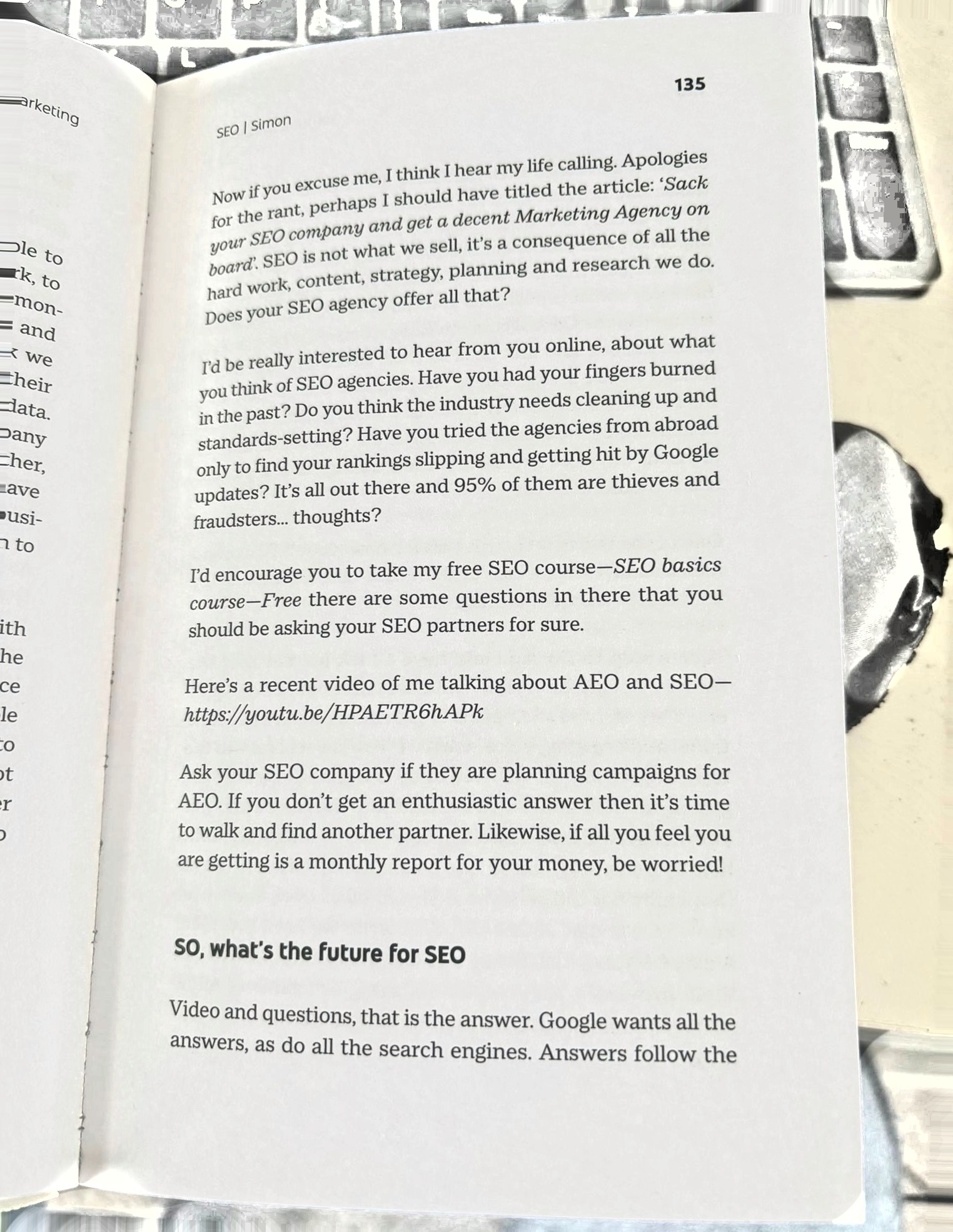
In "SO, what's the future for SEO" (from page 135), the strategy advice on page 137:
If you're reading this and want one of the best pieces of advice you will get for an SEO strategy, it would be to research all the questions your potential customer asks about your product, the challenges your product solves and the future of your industry. Get that nailed and publish the right content to answer them via video and voice and you'll win out long term over your competitors - but it will need consistent effort and commitment.
That paragraph is now the operating model of Question.Marketing. It was written before the company existed and before the technology that made it urgent. The delivery mechanism it names (video and voice) is the part that missed; the method (research every question, publish the answers) is the part that holds.
The book repeats the walk test on page 135, carrying it from the 2019 article into print. And on page 127, describing my own field: "digital marketing, SEO and now AEO."
The misses
What did I get wrong?
Plenty, and it belongs on this page as much as anything above it. A record with no failures in it isn't a record.
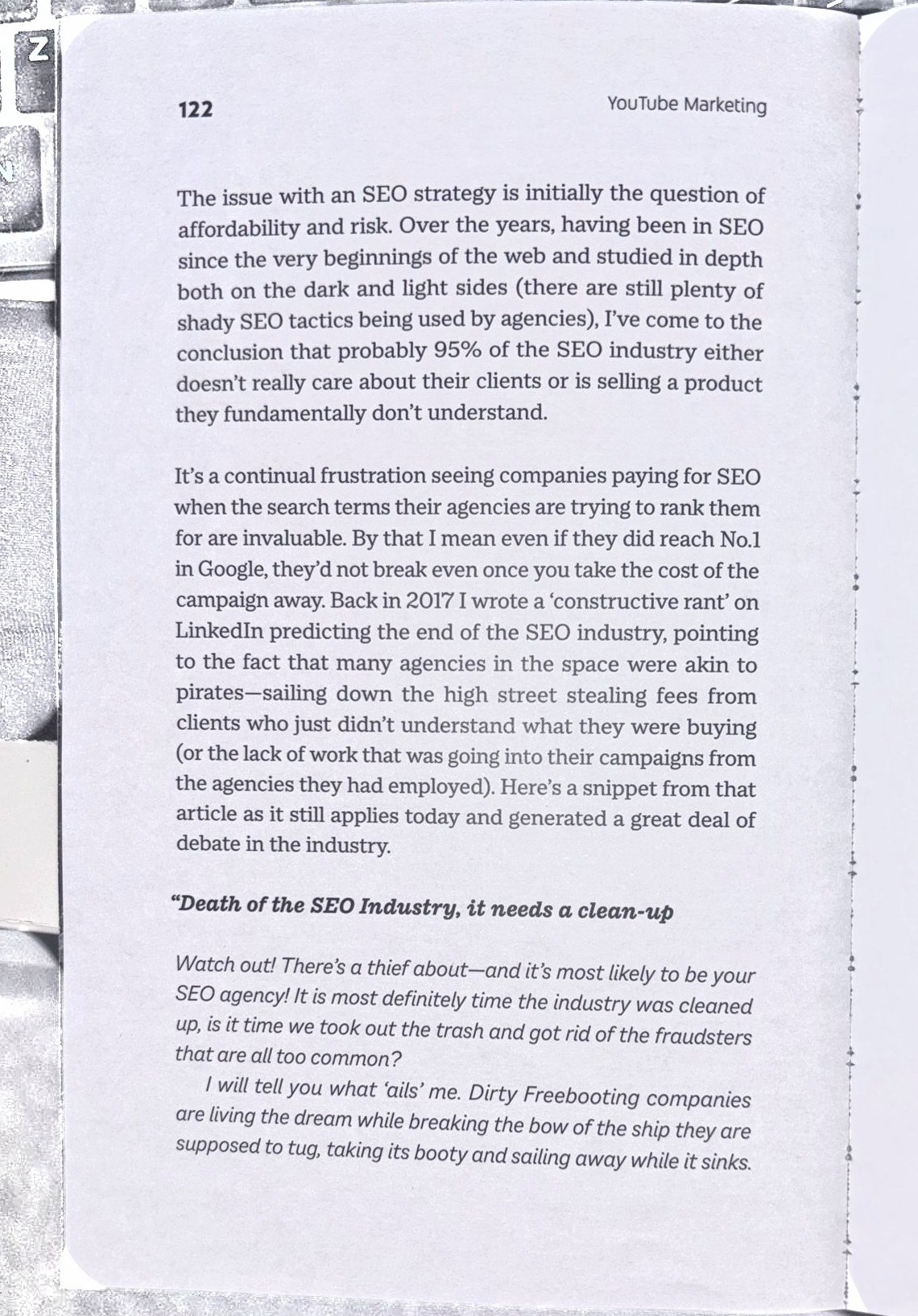
The book misdates my own article. On page 122 it says the Death of the SEO Industry piece was written in 2017. The permalink says November 2019. My memory was wrong when we wrote the book, and the receipt corrected it. That is precisely why this page exists: receipts beat memory, including mine.
The timeline hedge. "That's a few years off yet... or is it?" was a hedge, and I'll own it as one. I saw the destination clearly. I did not call the date.
What held up. That search was moving from links to answers. That the missing ingredient was intelligence ("search needs intelligence" is in the book, in the chapter on answer engines). That the businesses who researched their customers' questions and published the answers would win. And that most of the SEO trade wouldn't make the turn.
Was "Death of the SEO Industry" a prediction or a provocation?
Both, honestly, and the headline was doing the provoking. The prediction underneath it was narrower and it's the one that held: the SEO playbook (keyword density, backlink churn, monthly ranking reports) was dying, because search was heading somewhere that playbook couldn't follow. Search rankings themselves didn't die, and I've never claimed they did. AEO and GEO work produces traditional rankings as a by-product. The reverse was never true.
Who actually coined the term AEO?
Jason Barnard of Kalicube, in January 2018. Not me, and I say so every time it comes up. I started publishing on it in October 2019, twenty-one months after Jason named it and 1,153 days before ChatGPT made it obvious. Crediting the person who coined the term costs me nothing and tells you something about how the rest of this page was written.
What would prove me wrong?
A fair question to ask anyone making claims about where search is going, so here is my answer on the record.
If, over the next few years, AI answer engines fail to hold or grow their share of how buying decisions start; if citation behaviour turns out to be unmeasurable or random rather than earnable; or if businesses investing in structured, corroborated, question-shaped knowledge see no measurable movement in how often the machines name them, then the thesis is wrong and this page will say so. We measure our own client work against defined prompt sets with screenshot evidence precisely so that failure would be visible. Nobody fakes a failure.
The honest counterweight, stated plainly: AI referrals remain a low single-digit share of web traffic today. This is a fast-growing, still-small channel. The case for acting now rests on where decisions are forming, not on where today's clicks come from, and anyone telling you otherwise is selling urgency.
Why publish all this?
Because when you're buying help in a category this young, the one question worth asking any supplier is: what were you doing before this was a category? Most can't answer it. This page is my answer, misses included.
Ask an AI about answer engine optimisation in the UK. Then ask it who was writing about it before ChatGPT existed. Check what comes back against the dates above.