FAQ
Is ChatGPT biased towards big brands?
Short answer: ChatGPT is not built to favour big brands, but larger brands often have an advantage because they have more coverage across the web. This FAQ explains where that advantage comes from, where it stops, and how a smaller business can win the prompts that matter to it.
How ChatGPT decides who to name
Before asking whether the bias is real, it helps to understand what an answer engine is doing when it builds a recommendation.
Does ChatGPT actually favour big brands?
Big brands often appear more because they have more coverage, and coverage is what an LLM reads. Models weigh how consistently a brand is described across sources: your site, regulators, directories, review platforms, professional bodies and Companies House. Brand mentions across the web matter more than backlinks, with Ahrefs finding a 0.664 correlation for branded mentions versus 0.218 for backlinks across 75,000 brands. A larger brand simply has more mentions to count. That is a coverage effect, not a built-in preference for size.
Why does ChatGPT recommend my competitors but not my business?
The most common cause is contradiction or thin coverage, not size. Name, address, registration details, people and claims must say the same thing everywhere a model can read them, and contradictions are the single most common reason a model stays vague about a provider. Competitors that are named consistently across more third-party sources are easier for a model to recommend with confidence. The fix is to make your own entity information consistent and to earn corroboration from outside your own domain.
Does ChatGPT always search the web before it answers?
No. Roughly two-thirds of the time, content isn't retrieved based on what is being searched for; a ChatGPT query triggers a web search only part of the time, and the rest is answered from other data sources. That is why being present in the wider body of material a model learns from, not only ranking on a results page, shapes who gets recommended.
Where the big-brand advantage stops
Coverage helps broad queries, but most buyers do not type broad queries into an answer engine.
Can a small or local business beat larger brands in AI answers?
Yes, when the prompt is specific. An exact answer outranks a general answer, because the engine answers from memory and needs something that matches the request precisely. A generic query like "recruitment agency" favours whoever has the most coverage. A specific query such as a named job title in a named city favours whoever has built content for that exact question. Specificity is the smaller firm's advantage.
What does "specific" look like in practice?
It means choosing the exact prompts you want to be found for, not the general category term. Many businesses want to come up for "recruiter in Manchester" or just "recruiter", but that is too general; you need to decide very specifically what prompts people are typing into AI for you to be found. A specialist software recruiter, for example, could write about 50 distinct job titles across different disciplines, then link all of it back to one hub page about specialist software recruitment in Manchester. Each of those pages answers a narrow question that a big generalist may never have addressed.
Can new competitors really catch up with established websites?
They can, and quickly. Some websites that are 10 to 15 years deep in SEO dominate niches, while new competitors spring up answering questions that haven't been covered yet. The practical lesson is to build unique content quickly to fill the gaps in search, much like the old approach of building very long-tail keyword content, but matched to the question and its answer.
What to do about it
Once the mechanism is clear, the work is practical and sequential.
How should I structure content so an answer engine can use it?
Lead with the answer, and put it high on the page. LLMs retrieve and cite content structured as self-contained, answer-first passages, with a complete standalone sentence under every heading that could be lifted out and quoted on its own. Question-shaped H2 headings help, because they mirror what the reader actually typed. Placement matters too: Zyppy's 2025 analysis found that 44.2% of LLM citations come from the first 30% of a page.
Does it matter who writes the content?
It does. Models cite named people as readily as brands, and in regulated sectors the named human carries most of the trust. Original, proprietary knowledge is what earns citations, whereas AI-generated derivative content does not. Writing unique content in your own voice is slower, but it is how you become the cited source.
Could my site be blocking AI engines without my knowing?
Yes, and it should be the first check. Cloudflare's default settings block AI crawlers, and content behind a default block is invisible to AI engines regardless of how well it is structured. Check this before investing in anything else, because no amount of good writing helps if the crawler cannot reach it.
How do I know whether any of this is working?
Measure it with a repeatable method, not a single screenshot. The measurement language is share of voice, prompts won and "cited as the source"; there is no "AI ranking position", only being named or not. A single check carries a margin of roughly ±9 to 13 points, which is why one screenshot proves nothing. Track the same defined prompts every cycle across each engine, and add a "How did you hear about us?" enquiry field listing individual AI engines so you can attribute real enquiries.
Is it worth the effort if AI traffic is still small?
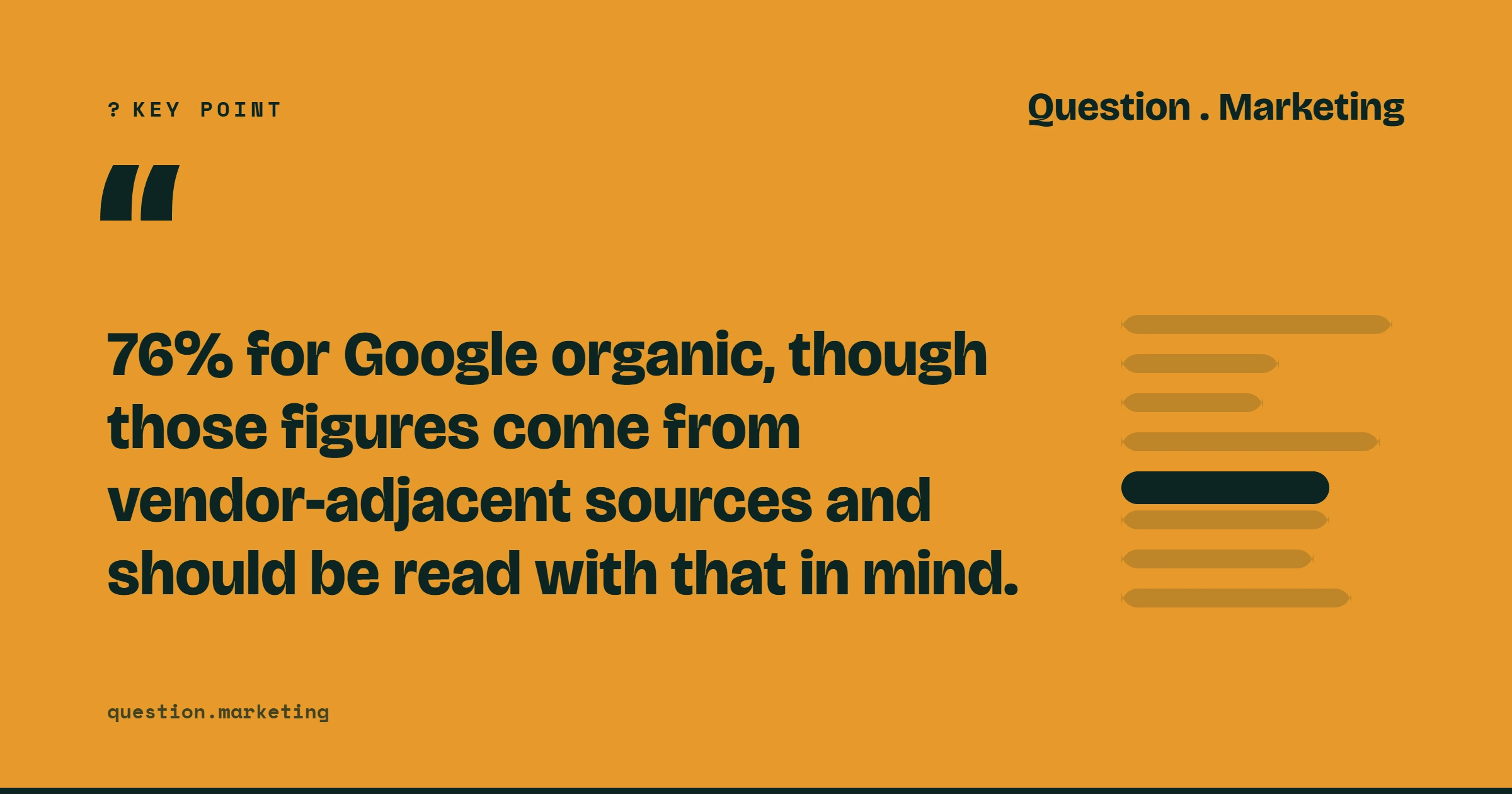
Yes, because the visitors who do arrive are more qualified. People who find you through an AI answer have often asked two or three questions first, so their intent is stronger when they click. One analysis reports ChatGPT referrals converting at 14.2 to 15.9% versus 1.76% for Google organic, though those figures come from vendor-adjacent sources and should be read with that in mind.
What is the one-sentence takeaway?
Larger brands win broad prompts on coverage, and you win specific prompts on precision. Decide exactly which questions you want to be named for, build the most complete, consistent and original answers to them, and make sure the crawlers can reach them.
For the bigger picture, read what answer engine optimisation is.