FAQ
What does an answer engine actually do differently from a search engine?
This FAQ explains how an answer engine differs from a search engine in what it returns, how it gets its information, and what that means for the brands it names. It is written for marketing leaders who want a plain account of where the click has gone.
The core difference
A search engine hands you a list of links and leaves the decision to you. An answer engine reads on your behalf and gives you one response, which changes what a brand has to do to be seen.
What is the basic difference between a search engine and an answer engine?
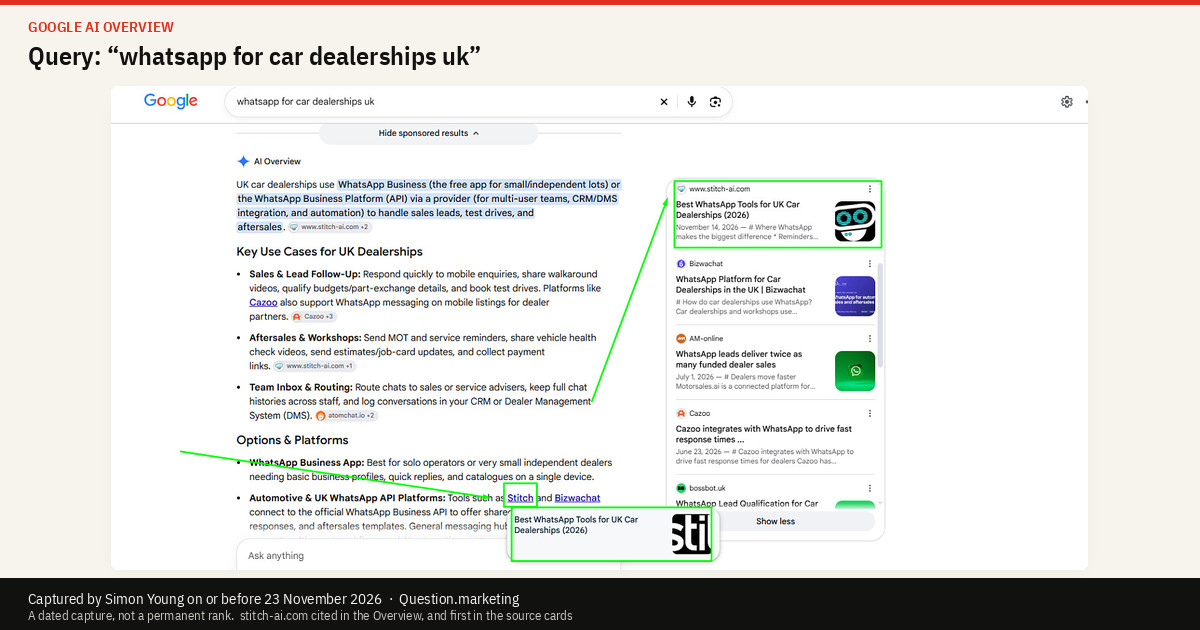
A search engine returns a ranked list of links and leaves the user to choose between them. An answer engine such as ChatGPT, Perplexity or Google AI Overviews reads sources on the user's behalf and writes one synthesised answer, often naming a handful of brands. The click and the shortlist now happen inside the answer. Answer engine optimisation (AEO) is the practice of getting your knowledge selected, quoted and attributed inside that machine-generated answer rather than getting a link ranked on a page of links.
What do people actually ask an answer engine?
People ask questions and expect an answer, and that expectation is why search is moving toward no-click behaviour. The questions are often far more specific than a keyword. Asking for the best software or technology recruiter in Manchester, or for a very specific job title, is a different request from the one that would have been served in Google. Answer engines also move people through a sequence: one question, then a qualifying question, then down a funnel toward a purchase or enquiry.
How the two behave differently
Both products start from a question, but the way each one uses the web is different, and the difference shows up in your analytics.
Does an answer engine rank pages the way a search engine does?
No. An answer engine does not compete at page level. You first have to decide what you want to be found for, and that has to be specific, because an exact answer will outrank a general one. The main question a person asks then breaks into sub-questions, and those run separately below the authority question. A hub with many specific answers linked back to a main page gives an answer engine far more to draw on than a single broad page does.
What has happened to clicks as a result?
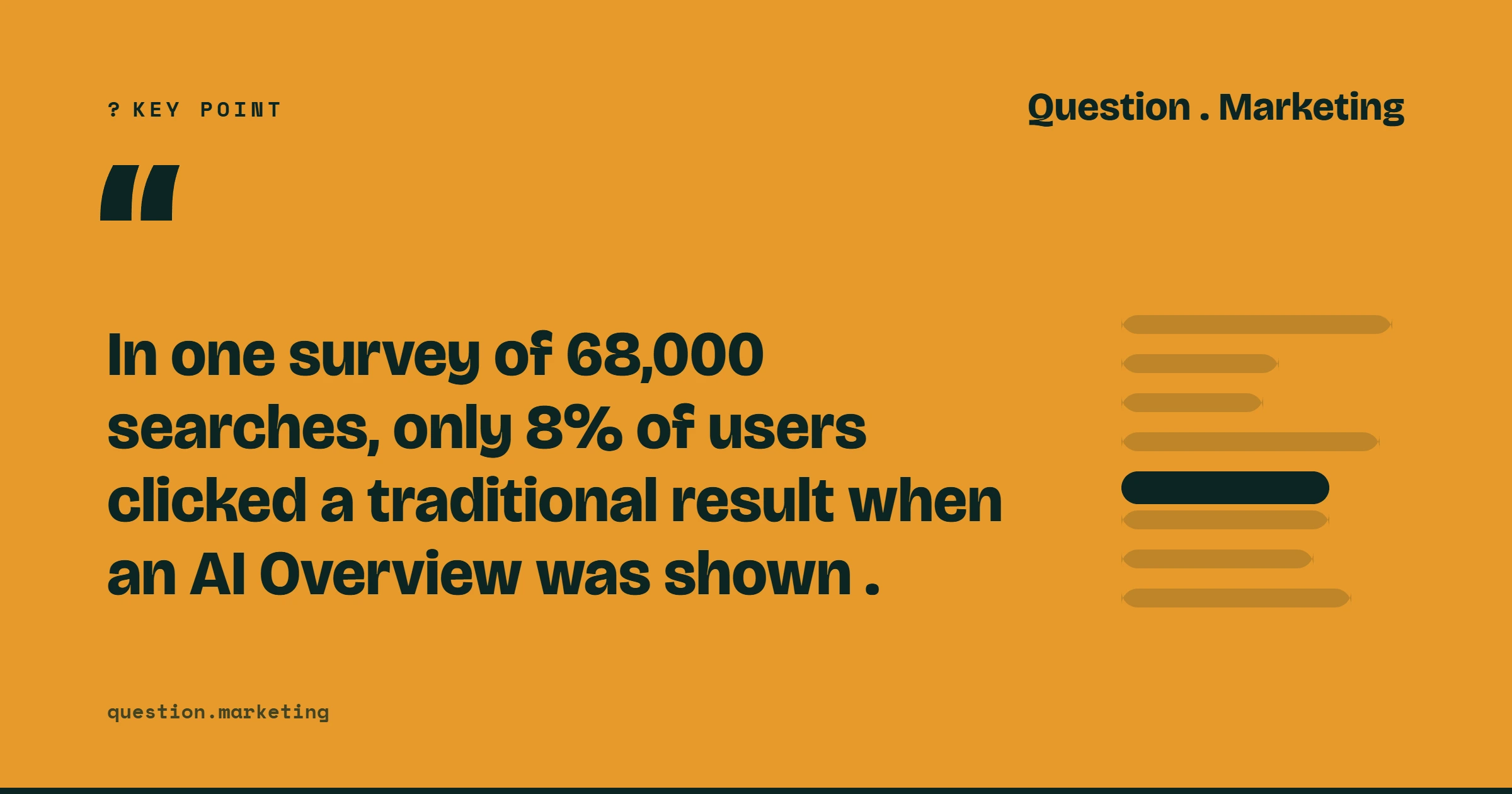
The click has largely stopped rather than moved to another channel. Google's AI Overviews now appear on roughly half of all queries, and when one appears, click-through on the top result falls by somewhere between a third and two thirds depending on query type. Around six in ten searches now end without anyone visiting a website. In one survey of 68,000 searches, only 8% of users clicked a traditional result when an AI Overview was shown. Rankings and impressions hold while sessions collapse.
Can I make up the lost traffic from AI referrals instead?
Not yet. AI referral traffic is still around 1% of total web traffic, growing roughly a point a month. Telling yourself you will pick up AI traffic instead is not a plan. The plan is to be inside the answer.
What this means for brands
If the shortlist forms inside the answer, your job changes from earning a ranking to earning a mention.
Why do answer engines name brands rather than just list links?
Because the engine is doing the research the user used to do. Much of that research now happens inside the answer engine, so people arrive better informed and pre-qualified once they reach your brand. The shortlisting step that used to happen across three or four websites now happens in one response.
Are visitors from answer engines worth more than visitors from search?
We have seen that they can be. People who have been exposed to a brand inside an answer engine are pre-qualified, and we are finding they convert four or five times more efficiently than people who arrive after browsing several websites. Someone who reaches your content after asking two or three questions already has stronger intent. Treat that as an observation from our own work rather than a guarantee, since results vary by sector and platform.
Is AEO the same thing as GEO?
No, and we use the two terms for different jobs. AEO is the primary term for building marketing for the LLM and AI-search world, being the trusted answer inside the chat window. GEO, or generative engine optimisation, is the mechanics, the plumbing that replaced SEO's plumbing. When we mean both, we say "AEO and GEO".
What should I do first?
Start with access, then specificity. Many sites sit behind Cloudflare, and by default AI crawlers cannot reach content behind it, so you need to set it to allow them or you will not be listed. Then pick the specific prompts you want to be found for and build content that matches each question and answer. A practical source for those questions is your own customer calls. Record them, transcribe them, and feed the questions and answers into a knowledge base.
For the bigger picture, read what answer engine optimisation is.